

Rebirth of Witchcraft Book Review An Honest Take on Modern Magic and Mystery
There is something extraordinary about reading a history of modern witchcraft written by someone who was actually there when it happened. Doreen Valiente wasn’t just a witness to the rebirth of witchcraft in mid-twentieth-century England—she was one of its principal architects. As Gerald Gardner’s High Priestess, as the author of the Charge of the Goddess, and as a practitioner who maintained active involvement in the witchcraft community for over four decades, Valiente occupied a vantage point that no other historian has matched. I came to The Rebirth of Witchcraft after reading several academic histories of the Wiccan movement and found that Valiente’s account, while inevitably shaped by her personal perspective, filled in gaps that no amount of archival research could address. She knew these people. She was in those rooms.
Learn more about Rebirth of Witchcraft on Wikipedia
As an Amazon Associate, I earn from qualifying purchases.
Title: The Rebirth of Witchcraft
Author: Doreen Valiente
Publisher: Robert Hale
Published: 1989
Pages: 224
ISBN: 978-0709037149
My Rating: ★★★★★ (5/5)

The Rebirth of Witchcraft by Doreen Valiente
Bottom Line
Doreen Valiente’s The Rebirth of Witchcraft is an indispensable firsthand account of how modern witchcraft emerged, grew, and splintered in the second half of the twentieth century. Valiente covers Gerald Gardner’s founding of modern Wicca, the contributions and controversies of figures like Alex Sanders and Robert Cochrane, the repeal of England’s Witchcraft Act, and the evolution of the movement through the 1980s. As both participant and observer, she brings irreplaceable personal knowledge to a story that is often told secondhand. This is essential reading for anyone who wants to understand where modern witchcraft comes from.
An Overview: History From the Inside
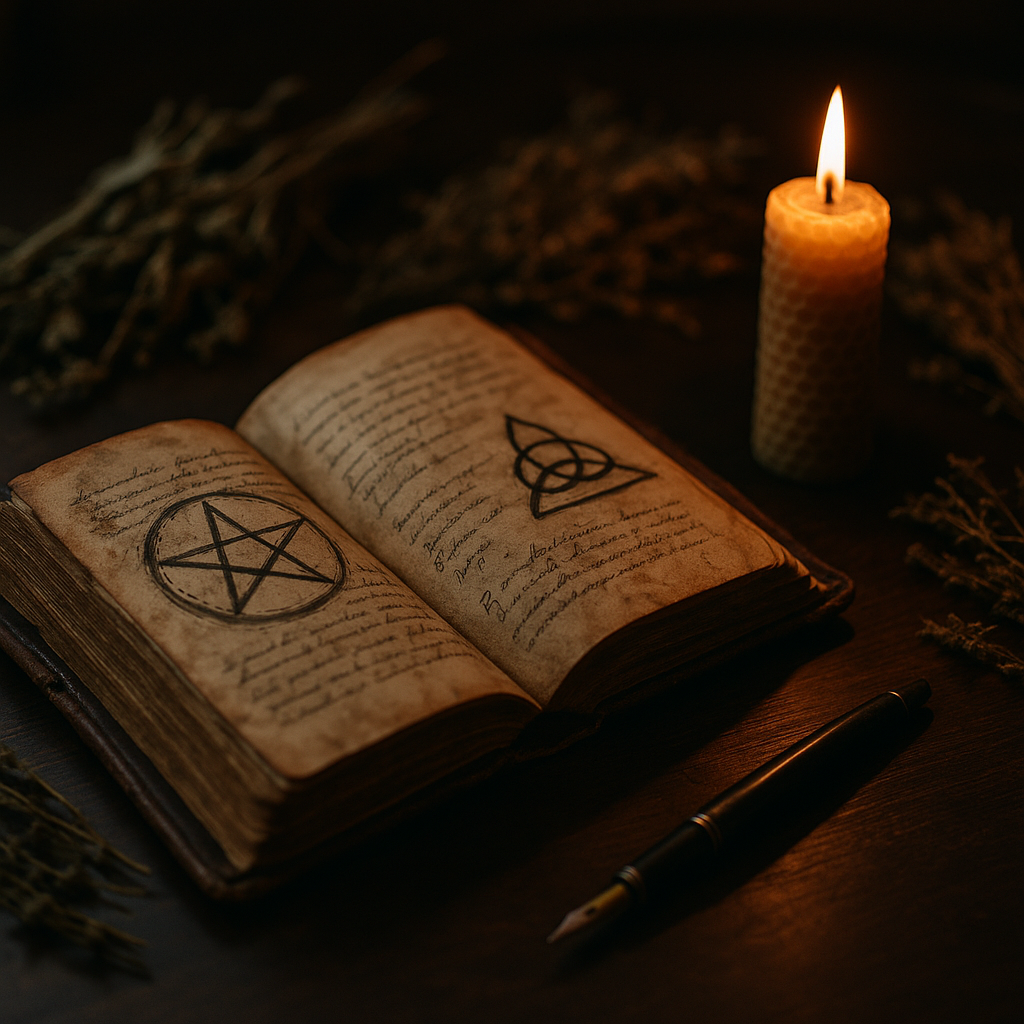
Valiente organizes The Rebirth of Witchcraft roughly chronologically, beginning with the repeal of England’s last Witchcraft Act in 1951—the legal change that made it possible for Gerald Gardner to go public with his claims of having been initiated into a surviving coven of traditional witches. She traces the development of Gardnerian Wicca through the 1950s and 1960s, including her own central role in rewriting much of Gardner’s ritual material, and then follows the movement’s expansion and fragmentation through the emergence of Alexandrian Wicca under Alex Sanders, the “traditional” witchcraft of Robert Cochrane, and the various other groups and personalities that shaped the British craft scene.
The writing is clear, detailed, and refreshingly candid. Valiente doesn’t spare herself or her allies from criticism when she thinks it’s warranted, and she addresses the controversies within the movement—the feuds, the ego clashes, the disputed claims of lineage and authenticity—with a directness that many insider histories lack. At the same time, her obvious love for the craft and her respect for what it represents prevent the book from becoming merely gossipy. The weakness is that Valiente’s perspective, while invaluable, is necessarily partial: she has opinions about the people and events she describes, and those opinions inevitably color her account.
Gardner, the Book of Shadows, and Valiente’s Own Role
The chapters on Gerald Gardner are the book’s foundation, and Valiente’s account of her relationship with him is the most detailed firsthand description we have. She describes meeting Gardner through Cecil Williamson’s Witchcraft Museum on the Isle of Man, being initiated into his Bricket Wood coven, and gradually realizing that much of the “traditional” material Gardner claimed to have received from the New Forest coven was actually cobbled together from Aleister Crowley’s writings, the Key of Solomon, and other published sources.
Her description of confronting Gardner about the Crowley material is one of the book’s most memorable passages. She writes that Gardner initially deflected, claiming the original rituals had been fragmentary and needed supplementation, but eventually acknowledged that he had drawn on Crowley. Valiente’s response was to offer to rewrite the material herself, replacing the Crowley borrowings with original compositions. The result was the version of the Book of Shadows that most Gardnerian covens still use, including the Charge of the Goddess—which Valiente reveals she composed by combining elements from Leland’s Aradia with her own original prose and verse.
This account is historically significant because it establishes Valiente’s authorship of texts that are often attributed to “ancient tradition” or to Gardner himself. Her willingness to set the record straight, without either aggrandizing her own role or diminishing Gardner’s genuine contributions, reflects the intellectual honesty that characterizes the entire book.

Alex Sanders, Robert Cochrane, and the Fragmenting Movement
Valiente’s treatment of Alex Sanders—the self-proclaimed “King of the Witches” who founded the Alexandrian tradition in the 1960s—is one of the book’s most nuanced sections. She clearly has reservations about Sanders’s flamboyant publicity-seeking and his sometimes dubious claims about his own history, but she also acknowledges his genuine magical abilities and the sincerity of his best work. Her description of attending one of Sanders’s rituals and observing what she believed to be a genuine altered state during his invocation is particularly striking, given her general skepticism about his claims.
Even more fascinating is her account of Robert Cochrane, who presented himself as a practitioner of hereditary “traditional” witchcraft distinct from Gardner’s reconstructed Wicca. Valiente was drawn to Cochrane’s claims and worked with his group for a period, attracted by his emphasis on mystical experience over ceremonial form. She describes his rituals as genuinely powerful but also recounts his growing instability, his bitter rivalry with Gardner’s followers, and his eventual death by suicide in 1966 from a belladonna overdose on Midsummer Eve. Her account of receiving the news of his death, and her complex feelings about a man she both admired and distrusted, is one of the most humanly affecting passages in the book.
Writing Style and Craft
Valiente writes with the clarity and precision of a natural historian. Her prose is straightforward, well-organized, and free of the mystical vagueness that often afflicts books about witchcraft. She has a journalist’s instinct for the telling detail and an archivist’s respect for accuracy, frequently citing specific dates, locations, and documentary sources to support her claims. The narrative voice is authoritative without being pompous, and she deploys her dry wit effectively—her description of the “witch wars” between rival traditions in 1960s London is both informative and wryly entertaining. The book’s pacing is excellent, moving briskly through five decades of history without either rushing or dragging.
Emotional Impact
Despite its historical focus, The Rebirth of Witchcraft carries real emotional weight. The passage about Cochrane’s death is genuinely moving, as is Valiente’s reflection on Gardner’s final years—the aging founder of a new religion, increasingly isolated from the community he had created, dying alone in 1964 aboard a ship returning from Lebanon. There’s also a quieter sadness running through the book: Valiente’s evident disappointment at the petty feuds and ego battles that have plagued the witchcraft movement, and her wish that practitioners would focus on the spiritual substance of the craft rather than squabbling over lineage, titles, and territorial claims. That disappointment, expressed with more sorrow than anger, gives the book a moral weight that elevates it above mere historical chronicle.
Pros and Cons
What Works
- Irreplaceable firsthand perspective: No other author can match Valiente’s direct involvement in the events she describes. Her accounts of Gardner, Sanders, Cochrane, and others are primary sources of immense historical value.
- Intellectual honesty: Valiente doesn’t romanticize the history of modern witchcraft. She addresses the controversies, the fabrications, the personality clashes, and the genuine achievements with equal candor, producing a balanced account that respects readers’ intelligence.
- Readable prose: For a book covering complex historical material, The Rebirth of Witchcraft is remarkably accessible. Valiente writes clearly and engagingly, making the narrative compelling even for readers with limited background knowledge.
What Could Be Better
- Inevitable bias: As a participant in the events she describes, Valiente necessarily has opinions and allegiances that color her account. Her portrayal of Gardner is more generous than some scholars think warranted, and her treatment of some rival figures may reflect personal feelings as much as objective assessment. Readers should supplement her account with other historical sources.
- British focus: The book deals almost exclusively with the British witchcraft scene, giving little attention to the parallel developments in America and continental Europe that were equally important to the movement’s growth. American readers looking for the history of Wicca’s transplantation to the United States will need to look elsewhere.
Who Should Read This
Anyone with a serious interest in the history of modern witchcraft should read this book. It’s essential for Wiccans who want to understand their religion’s origins, valuable for scholars studying new religious movements, and genuinely interesting for general readers curious about how a small group of English eccentrics in the 1950s launched a spiritual movement that now spans the globe. Beginners to Wicca will benefit from the historical context it provides, though they should pair it with a practical introduction like Cunningham’s for the how-to dimension. Readers who prefer myth to history—who would rather believe in an unbroken lineage of witchcraft stretching back to the Stone Age—may find Valiente’s candor uncomfortable.
Final Thoughts
Related on ken-saunders.com: A Voice In The Forest, Spirit Conversations With Alex Sanders Book Review – A Friendly Dive Into Mystical Wisdom
Doreen Valiente’s The Rebirth of Witchcraft is one of those rare books that is both historically important and genuinely enjoyable to read. Valiente’s combination of insider knowledge, intellectual honesty, and narrative skill makes this the definitive firsthand account of modern witchcraft’s origins and early development. The book doesn’t shy away from the messiness of that history—the borrowed texts, the inflated claims, the bitter rivalries—but it also conveys the genuine spiritual power and transformative potential that Valiente found in the craft and devoted her life to nurturing. I finished it with deepened respect for both Valiente herself and for the tradition she helped create, flaws and all. Every Wiccan’s bookshelf should have a copy, and it sits permanently on mine.
Get Ken’s newsletter
Honest reviews and curated finds — the gear, gadgets, books, and recipes actually worth your money. No spam, unsubscribe anytime.


