

Essentialism Book Review: Essentialism by Greg McKeown
As an Amazon Associate, I earn from qualifying purchases. This helps support the site at no extra cost to you.
Disclosure: This post contains affiliate links. If you buy something through one of my links, I may earn a small commission — at no extra cost to you. I only recommend things I’ve actually read, used, or genuinely believe in.
Essentialism Book Review: Greg McKeown’s Case for Doing Less — and Actually Meaning It
Here’s the thing about an essentialism book review: everybody writes one like they’ve had an awakening. Like they were drowning in a sea of half-finished projects and pointless meetings, cracked this book open, and emerged baptized — lean, purposeful, and cured of overcommitment forever. I’m not going to do that to you. I’m 62 years old. I’ve been studying traditional astrology for over four decades, I got sober in July 2023, and I’ve read enough self-help books to wallpaper a good-sized room with their dust jackets. I’ve seen every flavor of “do less, be more.” Most of them have the staying power of a cocktail napkin. But Essentialism by Greg McKeown? This one’s different. Not because it fixed me. But because it named the thing I’d been doing wrong my whole damn life — in plain English, without making me feel like an idiot for it.

And given that “essentialism” is quietly replacing minimalism as the design and lifestyle philosophy of 2026 — warmer, more curated, less “bare white wall” — this felt like exactly the right moment to revisit it.
The Book at a Glance
Title: Essentialism: The Disciplined Pursuit of Less
Author: Greg McKeown
Publisher: Crown Business
First Published: 2014
Pages: 272
Ken’s Rating: ★★★★☆ (4/5)
Best For: Anyone drowning in obligations they never actually agreed to

Essentialism: The Disciplined Pursuit of Less
Greg McKeown’s landmark argument that saying no isn’t a failure — it’s a strategy. Clear, practical, and quietly life-changing.
Check Price on Bookshop →The Bottom Line (Read This First)
Essentialism is a single, sharp idea stretched into a 272-page book — and somehow McKeown earns every page of it. The core argument: you can’t have it all, you were never supposed to, and every time you say yes to something non-essential, you’re silently saying no to what actually matters. It’s not minimalism. It’s not lazy. It’s ruthless, intentional curation. The verdict: this is one of maybe five productivity books I’d actually put in someone’s hands without a sheepish disclaimer.
What This Book Is Actually About
McKeown isn’t asking you to quit your job, move to a yurt, and eat lentils in silence. That’s minimalism. That’s a different book and a different lifestyle Instagram account. What McKeown is asking — demanding, really — is that you stop pretending everything is equally important. Because it isn’t. And the pretending is killing you.
The book is divided into four parts: Essence, Explore, Eliminate, and Execute. Think of it as a full cycle — first you understand why this matters, then you learn how to identify the vital few from the trivial many, then you actually cut the fat, and finally you build a system that keeps the fat from growing back. It’s a complete methodology, not just a pep talk.
McKeown draws from a wide net — behavioral economics, neuroscience, management theory, Stoic philosophy, even children’s stories. He’s got Buffett anecdotes. He’s got research on decision fatigue. He opens Chapter 1 with the kind of story that makes you slightly uncomfortable because you recognize yourself in it. A man spreads himself across so many opportunities that he ends up being merely mediocre at all of them. That’s not a cautionary tale. That’s Tuesday.
The writing is clean and accessible — maybe a little too neat in places, which I’ll get to — but the central framework is solid. This is a habits and systems book dressed up in philosophy clothes, and that combination turns out to be exactly right.
Quick Pros and Cons Snapshot
- Pro: The core idea is razor-sharp and immediately useful
- Pro: Organized like a genuine methodology, not random chapters bolted together
- Pro: McKeown writes like he’s talked to real human beings before
- Con: Repetitive in the middle third — he tells you the same thing five different ways
- Con: The business examples skew heavily toward high-functioning Silicon Valley types
The Big Idea: You Are Not Obligated to Do Everything
McKeown’s central claim is this: most of us live as though other people have the right to decide how we spend our time. And we’ve somehow agreed to that arrangement. He calls this being “non-essentialist” — reactive, overwhelmed, saying yes by default, and then wondering why nothing meaningful gets done.
The Essentialist, by contrast, operates from a single question: Is this the most important use of my time and energy right now? Not “is this good?” Not “would this help someone?” Just: is this the most important thing? That’s it. That’s the whole filter.
I’ll be honest — when I first hit that concept, I laughed. Then I sat with it for about four days. Then I made a list of everything I’d said yes to in the last six months. It was not a short list. And most of it had nothing to do with what I actually care about: astrology, writing, my husband, recovery, and the handful of relationships that actually feed my soul.
There’s a passage in the Explore section where McKeown talks about the “wardrobe test” — if you have so many options that choosing what to wear is exhausting, you have too many clothes. You already know this. But he applies the same logic to your calendar, your obligations, your professional identity. That’s where it stings. The wardrobe metaphor isn’t cute filler. It’s scaffolding for a harder conversation.
He also has a brilliant little concept he calls “the 90 percent rule.” If something doesn’t score a 90 out of 100 on your personal criteria for what matters, it’s a no. Not a maybe. Not a “let me think about it.” A no. The logic being: if it’s not a clear yes, it is a no. I’ve been applying this to everything from freelance requests to social invitations — and the clarity is, frankly, a little unnerving. In a good way.
This pairs well with the kind of digital decluttering work I wrote about earlier this year — turns out clearing your digital life and clearing your commitments are the same psychological muscle. McKeown just gives you the weightlifting program.
The Part About Saying No (Which Is Really About Saying Yes to What Matters)
The Eliminate section is where McKeown earns his money. This is the part other productivity books skip because it’s uncomfortable. It’s easy to tell people to “focus on what matters.” It’s another thing entirely to tell them how to stop doing the things that don’t.
He addresses the sunk-cost trap directly. You know this one — the project you’ve been half-committed to for two years that you can’t quit because you’ve already put so much into it. McKeown’s response: the time is gone. The only question is whether you’ll pour more in. He calls this “the endowment effect of our own efforts” — we overvalue things simply because we’ve invested in them. The solution isn’t brutal self-criticism. It’s just honest accounting.
Then there’s the chapter on “uncommitting” — which is about how to gracefully exit obligations you should never have entered. This section has practical language. Actual phrases you can use. Scripts, basically, for declining invitations without sounding like a sociopath or a doormat. Given that most of us say yes to things out of sheer social pressure and then silently resent the calendar for the next three weeks, this chapter alone might be worth the price of the book.
There’s also a fascinating chunk on “boundary setting” — not in the therapy-speak sense, but in the systemic sense. McKeown argues that the most effective people don’t constantly renegotiate their limits. They set the rules in advance and let the rules do the work. He gives an example of a CEO who simply stops attending any meeting with no clear agenda and no defined outcome. Full stop. Not negotiable. The meetings either get structured or they don’t happen. Results: about a third of the meetings disappear entirely. The rest get sharper.
Recovery taught me something similar — the value of having a few non-negotiable commitments that hold the structure. When I got sober in 2023, I didn’t try to moderate or negotiate. I drew a line. McKeown is basically arguing for that kind of clarity across the rest of your life. Not just sobriety, not just big dramatic decisions — but the small daily ones that quietly drain you if you let them. If you’re in recovery and the quit-lit genre has been your primary self-help reading, McKeown is a natural next step. Same principles, different arena.
Writing Style and Craft: Where McKeown Shines (and Where He Coasts)
McKeown is a clean, competent writer. Not dazzling. Not quotable in the way that, say, Marcus Aurelius or even James Clear is quotable — but disciplined, which is honestly appropriate given the subject matter. He structures each chapter around a central metaphor, delivers the argument, supports it with research or anecdote, and lands it with a practical takeaway. It works. It doesn’t overstay its welcome on a sentence level.
Where the book gets wobbly is in the middle. The Eliminate and Explore sections overlap conceptually more than they should. You start to feel like McKeown is circling the same point from slightly different angles because he’s committed to the four-part structure. A tighter editor could have cut thirty pages from the center without losing a single meaningful idea. That’s not a fatal flaw — it’s a known feature of the “business book extended from a TED talk” genre. You get used to it.
The anecdotes skew heavily toward high-achieving professionals — executives, Stanford MBA types, startup founders. If you’re a freelancer, a stay-at-home parent, or someone working two jobs to keep the lights on, some of the examples will feel a little… airless. McKeown assumes you have a degree of agency over your schedule that not everyone has. He gestures at this limitation once or twice but doesn’t really reckon with it. That’s worth naming.
Still — the core ideas translate universally, even if some of the illustrative examples don’t. You just have to do a bit of translation work yourself.
The Audiobook — Is It Worth the Listen?
The audiobook is narrated by the author, which in this case is a feature rather than a bug. McKeown has a calm, measured delivery that suits the material — he sounds like someone who has actually practiced what he’s preaching. He’s not performing urgency. He’s not doing the hustle-culture breathless speed-talk thing. He’s just… deliberate. And deliberate is exactly the right energy for a book about deliberateness.
Running time is around six hours. Clean, uncluttered production. If you’re a commuter or a walker — I do a lot of my best reading while walking — this one holds up well in audio — the Audible edition is read by McKeown himself. Some books fall apart when you can’t flip back to reread a paragraph. This one doesn’t, because the structure is so clear that you always know where you are in the argument.
What It Actually Felt Like to Read This Book
I picked this up because I was drowning. Not in the dramatic, cinematic sense — in the quiet, grinding, Tuesday-afternoon sense where you look at your to-do list and realize you’ve said yes to approximately seventeen more things than any human being can realistically accomplish, and you can’t remember agreeing to most of them.
I was trying to run this website, finish a piece on horary astrology for a client, keep up with correspondence, manage some home automation projects — my whole house runs on Govee now, which is genuinely wonderful but also requires occasional tinkering — and somewhere in there I was also supposed to be present, sober, and spiritually healthy. My spiritual director at my parish would probably say I was “scattered.” That’s a polite word for it.
Essentialism didn’t solve all of that. Let’s be clear. No book does. But it gave me language for the problem — and sometimes naming a problem is 80% of fixing it. The moment I read the line “if it isn’t a clear yes, it’s a no,” something clicked. Not because I’d never heard that idea before. Because McKeown builds the case for it so methodically that the idea has weight by the time it lands. It’s not a bumper sticker. It’s a conclusion.
I finished it in three sittings. I dog-eared more pages than I usually do. And then I did something I almost never do: I reread the Eliminate section two weeks later. That’s the tell. When you go back to a chapter because you’re not done with it yet — that’s a book that worked.
What’s Brilliant (and What Made Me Want to Throw It Across the Room)
The Brilliant Stuff
- The 90 Percent Rule. If something doesn’t score a clear 9 out of 10 on your personal criteria, it’s a no. This sounds extreme until you realize how many mediocre commitments you’re currently carrying because they scored a 6 and you didn’t want to say no. The rule creates automatic clarity where you used to have exhausting negotiations with yourself.
- The “Protect the Asset” chapter. This is where McKeown argues that you — your health, your sleep, your mental clarity — are the asset. Not your output. Not your deliverables. You. Protecting sleep and recovery time isn’t laziness. It’s capital preservation. This chapter alone undoes about a decade of hustle-culture brain damage.
- The Uncommitting scripts. Practical. Specific. Actually usable in real conversations. This is rare in a book about philosophy. McKeown doesn’t just tell you to set boundaries — he gives you the language for how to do it without blowing up your professional relationships or hurting people you care about.
The Things That Made Me Wince
- The repetition problem. McKeown makes his core argument cleanly in the first fifty pages. The remaining two hundred pages are largely variations on the theme. A useful framework repeated eight times is still just a framework. A sharper editorial hand would have served the book well.
- The privilege blind spot. The book assumes a lot of autonomy. If you’re hourly, caregiving full-time, or in a workplace culture where “no” has consequences, some of this advice will feel like reading about diets when you can’t afford groceries. McKeown knows this exists — he just doesn’t address it seriously.
- The examples get a little samey. There are a lot of tech executives and management consultants in this book. By the fourth Stanford anecdote, you start to feel the demographic limits of the research base. More variety would have strengthened the universality of the argument.
Who Should Actually Read This
You. If you’ve ever said yes to something and immediately felt a small part of you die inside — this book is for you. If you’re in early recovery and learning how to protect your energy and sobriety from a world that’s very good at demanding your time. If you’re a freelancer, a creator, or anyone who runs their own shop and keeps saying yes to projects that don’t actually move the needle. If you bought Atomic Habits and liked the systems approach but want the philosophy underneath it. And honestly — if you’ve been reading about the essentialism design trend in interior publications and felt oddly attracted to the idea of “intentional curation” over “more stuff, better organized” — this book is where that instinct comes from.
The Final Word
Here’s what I know at 62: you can’t do everything. And if you keep pretending you can, you’ll end up doing a lot of things badly instead of a few things well. McKeown doesn’t discover that truth — it’s as old as Stoicism, as old as the monastic traditions that my Catholic faith draws from. But he packages it for the modern, overcommitted, perpetually-pinged human brain in a way that sticks.
This is one of the books I put in the same corner of the shelf as Atomic Habits — not because they’re identical (they’re not), but because they’re both doing the rare thing: giving you a system that works, explained by someone who’s clearly thought it through. Four stars. Read it. Apply the 90 percent rule to your own calendar for two weeks and tell me it doesn’t change something.
You can find Essentialism on Bookshop.org — and yes, that’s an affiliate link. Bookshop supports independent bookstores, which I prefer. Amazon also has it if that’s your route. Either way: get the book.
If You Liked This, Read These Next

Atomic Habits — James Clear
Where McKeown tells you what to cut, Clear shows you how to build what stays. The ideal companion read.
Check Price on Bookshop →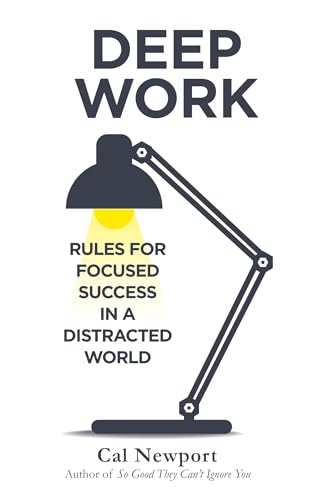
Deep Work — Cal Newport
Once you’ve cleared the clutter McKeown helps you identify, Newport tells you what to do with the focused time you’ve freed up.
Check Price on Bookshop →
The ONE Thing — Gary Keller
A more aggressive take on the same essential argument: stop multitasking, find the one domino, and knock it down. Less nuance than McKeown, more urgency.
Check Price on Bookshop →More from Ken-Saunders.com
If this review got your brain moving in the right direction, you might also want to look at my piece on digital decluttering and what a 30-day detox actually looks like in practice — very much the applied version of the McKeown principle. And if you’re thinking about focus tools and systems, I’ve been putting together a running list of the best mind mapping tools for 2026 that pairs well with the Essentialism methodology. Worth a look.
📬 Want more honest reviews, recovery-friendly productivity picks, and the occasional astrology tangent? Subscribe to the weekly newsletter — no spam, no hustle-culture nonsense, just the good stuff. Sign up at ken-saunders.com →
Get Ken’s newsletter
Honest reviews and curated finds — the gear, gadgets, books, and recipes actually worth your money. No spam, unsubscribe anytime.


